
Political Circle
Home
Start new test
Explore
About
"Active public services guarantee dignity, alongside robust free speech and privacy protections"
At 8 o'clock, you see fairness and basic security as shared responsibilities, whilst keeping a close eye on civil liberties. You favour public provision and redistribution to expand real freedoms. Rules should serve people, not control them. You want strong public services to guarantee dignity, with robust protections for free speech and privacy.
You believe equality and liberty reinforce each other. Economic security creates the foundation for genuine freedom, and civil liberties protect people from state overreach. You're suspicious of both market fundamentalism and authoritarian control. A good society provides for its members whilst respecting their autonomy.
Your position at 8 o'clock tells us your direction, but how far you are from the centre tells us the strength of your convictions. The Political Circle recognises three levels:
"Reduce inequality through smart policy, protect civil liberties always"
As a moderate 8 o'clock, you lean towards state-led economically but remain pragmatic about means. You support progressive taxation, public services and redistribution — but you'll use markets where they work. You're uncompromising about civil liberties though: free speech, privacy and due process are non-negotiable.
Historical example: Clement Attlee — his Labour government (1945–1951) built the British welfare state while preserving democracy.
"Strong state, ambitious redistribution, worker control — and absolute commitment to democracy"
You have clear convictions about needing substantial government intervention and economic transformation. Markets produce unacceptable inequality; only an active democratic state can counteract that. But democracy and civil liberties are non-negotiable — you want economic revolution through democratic means.
Historical example: George Orwell — democratic socialism combining state-led economics with fierce anti-authoritarianism.
"Replace capitalism through democratic means — but replace it we must"
As a strong 8 o'clock, you're uncompromising about needing to replace capitalism, but equally uncompromising about doing it democratically with full protection of rights. You want worker ownership of means of production, comprehensive planning and radical equality achieved through a democratic mandate with civil liberties protected absolutely.
Historical example: Rosa Luxemburg — "Freedom is always the freedom of the one who thinks differently."
UK Prime Minister (1945–1951)
Attlee built the post-war welfare state: founded the NHS, expanded social security, created council housing and nationalised key utilities. He combined socialist economics with liberal democracy and civil liberties, creating the 8 o'clock synthesis of solidarity and freedom that shaped modern Britain.
Writer and democratic socialist
Orwell championed socialism whilst warning against totalitarianism in "1984" and "Animal Farm." He believed in economic equality and collective provision but remained fiercely committed to truth, freedom and resistance to authoritarianism. His democratic socialism embodies 8 o'clock principles.
First Lady, diplomat and human rights advocate
Roosevelt championed the Universal Declaration of Human Rights, combining social and economic rights with civil and political liberties. Her advocacy for workers, the poor and marginalised alongside defence of freedom and dignity defines the 8 o'clock commitment to comprehensive human rights.
UK Labour Party leader and writer
Foot combined left-wing economics with passionate defence of civil liberties and nuclear disarmament. He fought for workers' rights and public ownership whilst championing free speech and parliamentary democracy. His principled democratic socialism exemplifies 8 o'clock values.
Revolutionary socialist and theorist
Luxemburg's democratic socialism emphasised mass democracy, workers' councils, and freedom of speech and dissent. "Freedom is always the freedom of the one who thinks differently." She opposed both capitalism and Bolshevik authoritarianism, and was murdered by right-wing paramilitaries for her revolutionary but democratic socialism.
President of Chile (1970–1973)
Allende attempted the democratic road to socialism. He nationalised copper and banks, carried out land reform and increased wages, while maintaining democracy, a free press and civil liberties throughout. He was overthrown by a military coup backed by the US. His experiment showed both the possibility and the fragility of democratic socialism.
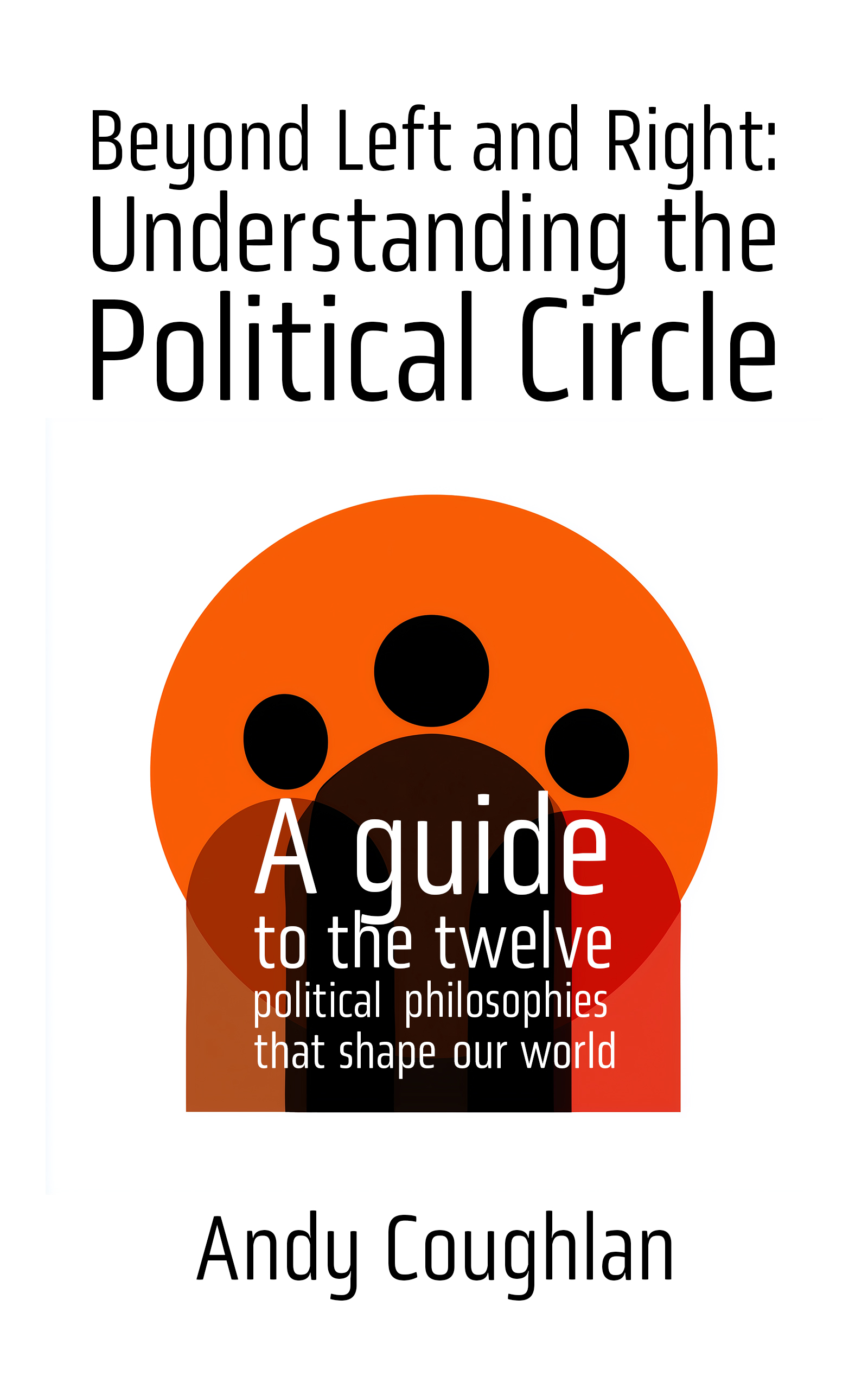
The new book, 'Beyond Left and Right: Understanding the Political Circle' is now available on Amazon.
Containing a wealth of information, the book explores all of the 12 philosophical positions with detailed analysis on each of the three levels.